01 / At the perimeter
Interior drain tile
A collection route may be considered where water reaches the perimeter of the slab. Layout, access, and discharge point must be planned for the property.
Interior water management / Connecticut
Where water appears matters. CRL reviews seepage, cracks, floor-edge water, and outside drainage before recommending a basement waterproofing scope.
CRL coordinates approved work through its personnel and subcontractors as the scope requires.
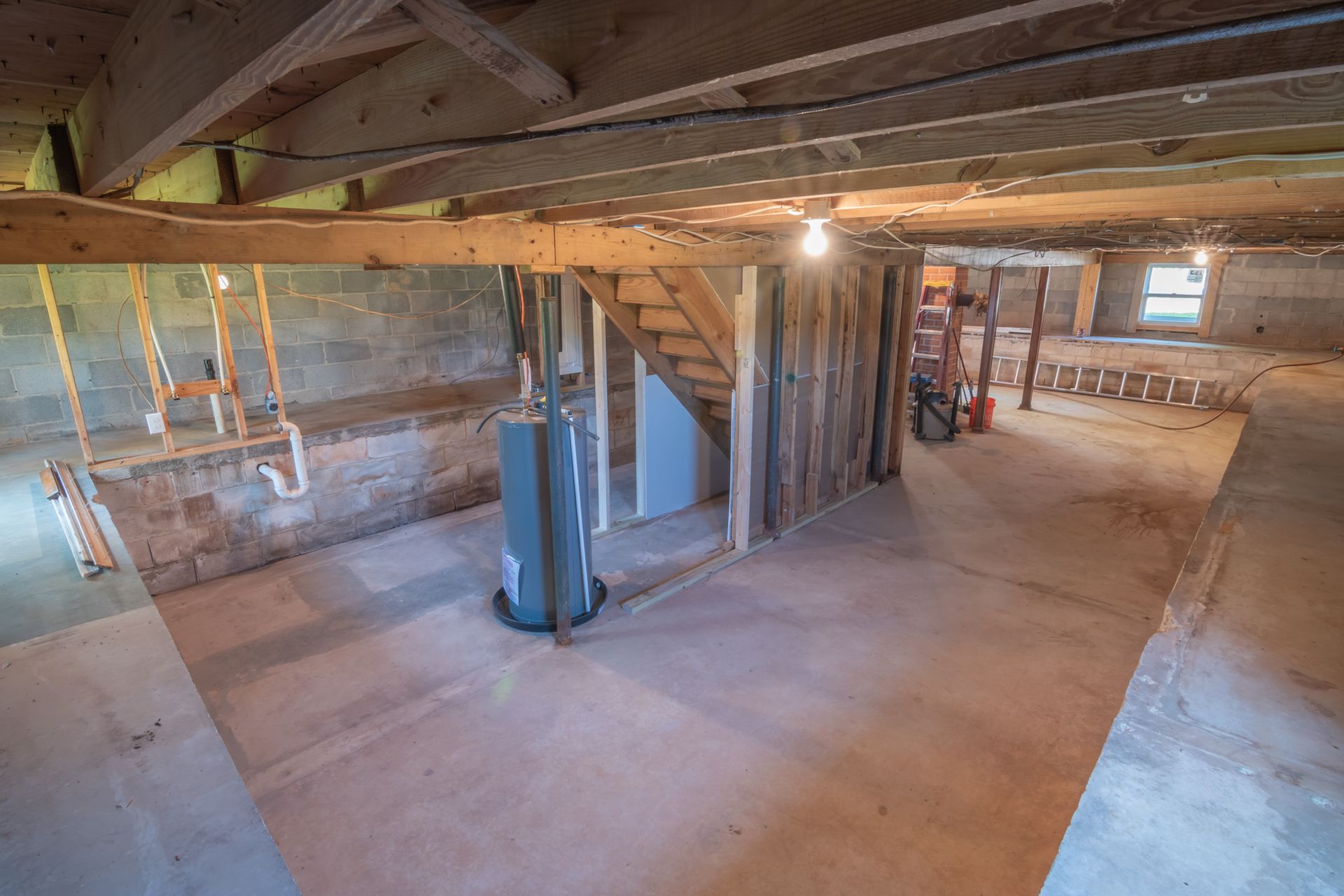
Representative unfinished space — not a CRL project.
Not one-size-fits-all
A puddle at the wall-floor joint suggests a different discussion than a damp patch at a crack or humidity across an entire room. When you contact CRL, note the location, timing, recent weather, and any previous repairs. Describe the affected area and the corresponding outside wall.
Site conditions, access, existing utilities, and the desired use of the basement shape the recommendation. A pump or drain is not prescribed from a photo alone.
Potential scope components
Each item is discussed only where it fits the observed issue and the written scope. CRL can coordinate a combination of interior and exterior work.
A collection route may be considered where water reaches the perimeter of the slab. Layout, access, and discharge point must be planned for the property.
Document location, width, movement history, and water entry. Repair method depends on what the assessment finds; structural concerns may need additional review.
When a collection system needs a pump, sizing, power, service access, and discharge route become part of the discussion. Learn about sump pumps.
Inside / Outside
Interior systems can collect water after it reaches the basement. Exterior foundation waterproofing addresses the outside of the foundation, typically with access, excavation, drainage, and restoration considerations. Neither description establishes the best solution for your property.
See exterior foundation workWhat to expect
We use your description to decide what needs onsite review and which trades may need to be involved.
Which wall or corner is affected? Does water appear during storms, thaw, or at another time? Mention prior systems and repairs.
Finished surfaces, utility lines, driveway access, adjoining spaces, and the possible discharge location all influence a workable scope.
The proposal should distinguish demolition, waterproofing work, pumping, disposal, and restoration where applicable.
If you hope to finish the basement, discuss that goal now so the water-control approach and later construction are not planned in isolation.
Common questions
No. The cause, entry point, amount of water, and site conditions need review before any system is specified.
That depends on the crack and whether there are other water paths. CRL reviews the wider pattern instead of assuming one visible crack explains every symptom.
This page focuses on interior basement water management. See exterior foundation waterproofing for excavation and outside-wall work.
Water concern / Connecticut
Include your town, the affected area, and timing. CRL can review the next step without promising a diagnosis or result in advance.